
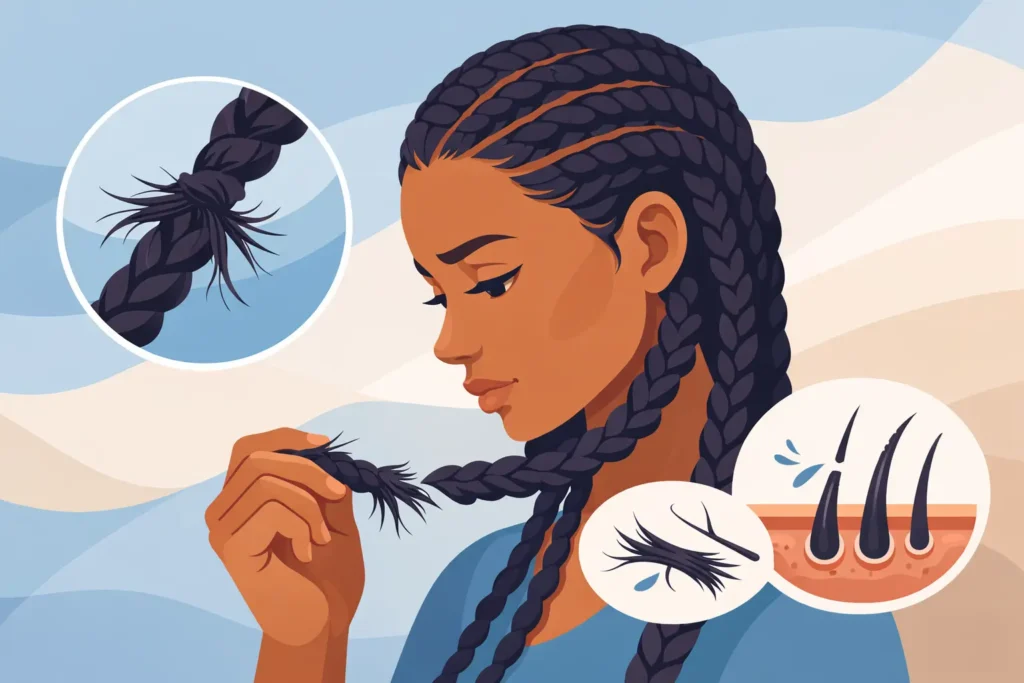
A fresh braid look should make you feel put together, not leave you counting broken strands around your edges. So, can braids cause hair breakage? They can, but braids themselves are not automatically the problem. Breakage usually comes down to how a style is installed, how it feels on your scalp, how long it stays in, and how your natural hair is handled before and after the appointment.
When done with thoughtful parting, appropriate tension, and a plan that suits your hair, braids can be a beautiful low-manipulation option. The goal is never just a flawless finish. It is a style that lets you show up and slay while your scalp and strands stay respected.
Can Braids Cause Hair Breakage? Yes, When Tension Is Too High
The most common braid-related concern is tension. A style may look extra sleek on day one, but if your scalp feels tight, tender, or like it is being pulled in several directions, that polished look is costing too much.
Constant pulling places stress on the hair shaft and follicle, especially around the hairline, temples, nape, and crown. These areas often have finer, more fragile strands. Over time, overly tight braids can lead to snapping, thinning edges, and traction alopecia, a form of hair loss caused by repeated tension. It is far easier to prevent than to reverse.
Pain is not part of the beauty process. Mild awareness of a new style can happen, particularly if you are not used to braids, but throbbing, headaches, bumps, burning, or pain when you move your face are clear signs that a style is too tight. Do not wait for it to “settle.” Contact your stylist quickly to have the tension adjusted, or remove the braids that are causing the problem.
A scalp-friendly installation is also not one-size-fits-all. Fine hair, relaxed hair, color-treated hair, fragile edges, and areas with previous breakage may need larger parts, less added hair, or a softer style choice. Precision means reading the hair in front of you, not forcing every client into the same braid size or pattern.
What Makes a Protective Style Truly Protective
The word “protective” can be misleading. Braids protect hair only when they reduce daily manipulation without creating new damage. A gorgeous set of knotless braids, Fulani-inspired braids, twists, or bohemian braids can support your routine when the foundation is right.
That foundation starts with clean hair and a healthy scalp. Product buildup, heavy oils, flakes, or tightly tangled roots can make detangling harder and create discomfort under a style. Before braiding, hair should be cleansed, conditioned, detangled patiently, and stretched in a way that does not overheat or overwork it.
The amount of extension hair matters, too. Extra-long, very small braids can be stunning, but length and weight add pull. If your natural hair is delicate, a waist-length microbraid look may not be the best match for every season. A medium size, a shorter length, or lightweight curls can still deliver a high-end finish without placing unnecessary stress on your strands.
Human hair blends and boho curls create beautiful movement, but they require a little more care than a simple classic braid style. The trade-off is worth it for many clients, as long as the curls are maintained gently and not constantly brushed, tugged, or allowed to matte at the base.
Your Parting Pattern Matters More Than You Think
Neat parts are not just for the photo. Clean, balanced sectioning helps distribute weight and tension more evenly. When a section is too small for the amount of hair added to it, the natural hair has to carry more than it should.
A skilled stylist considers braid size, density, the direction of the braid, and the strength of each area of your head. The goal is a look that feels secure but still has movement. You should be able to touch your scalp and move your head comfortably without feeling like your hairline is being challenged.
Breakage Can Also Happen Before and After the Braids
Sometimes clients blame the style, when the hair was already under stress before installation. Dryness, split ends, chemical processing, frequent heat styling, and skipped trims can make strands more likely to break during cleansing, detangling, or takedown.
The removal process is especially important. Hair naturally sheds every day, often between 50 and 100 strands. While your hair is braided, many of those shed strands stay tucked inside the style. When you take braids down, the amount of shed hair can look alarming, but shedding is different from breakage.
Shed hair typically has a tiny white bulb at one end. Breakage is usually shorter, uneven pieces without that bulb. Both can happen at once, particularly when braids are worn too long or removed too quickly.
Do not rush through takedown with dry hair and a fine-tooth comb. Use moisture and slip, work in small sections, and detangle from the ends upward. If you have a detailed style with added curls or lots of individual braids, give yourself enough time. Your hair deserves a gentle exit, not a midnight battle in the mirror.
How Long Should You Keep Braids In?
There is no single calendar rule for every braid style, but many installations look and feel their best for about four to eight weeks. Smaller braids may last longer visually, while boho styles may need earlier removal because loose curls can tangle or lose their definition.
Longevity is not the same as hair health. Once new growth becomes excessive, your hair can begin to twist around the base of the braid, making takedown more difficult. Buildup, itchiness, matting, and a style that no longer feels fresh are all signals that it may be time to let it go.
Listen to your scalp rather than pushing a style past its prime for one more week. A clean removal and a short reset between appointments can make a real difference, especially if you wear braids back-to-back.
Keep Your Braids Comfortable Between Appointments
Good maintenance protects the investment in your style and helps protect your natural hair. Cover your braids at night with a satin or silk scarf, bonnet, or pillowcase to reduce friction and preserve the finish. Keep your scalp clean with a lightweight cleanser or scalp-focused wash when needed, then dry thoroughly. Leaving the roots damp for long periods can lead to odor, irritation, and buildup.
Use scalp products with a light hand. Your scalp may enjoy a small amount of hydration, but layering heavy grease, mousse, edge control, and oils can create residue that is difficult to remove. If you wear boho curls, separate them carefully with your fingers and trim only obvious tangles rather than aggressively combing through the curl pattern.
Avoid tight ponytails, high buns, and repeated updos while wearing braids. Even a comfortable installation can become stressful when it is pulled into the same tight position every day. Switch up your styling, wear your braids down when possible, and give your edges a break.
If you exercise often, sweat does not mean you need to wash your hair daily. Focus on drying the scalp after workouts, keeping your hair covered when appropriate, and cleansing when buildup calls for it. A fresh scalp supports a comfortable style.
When to Skip Braids or Choose a Gentler Option
Braids are not always the best next move, and that is completely okay. If your scalp is inflamed, you have open sores, significant shedding, painful bumps, or sudden thinning, pause the installation and speak with a dermatologist or qualified health professional. Covering up a scalp issue can make it harder to identify and manage.
You may also want a lighter style if your edges are recovering, your hair has recently been bleached or chemically processed, or you notice more breakage than usual. Medium knotless braids, twists with less added hair, or a shorter, fuller style can give you the transformation you want with less tension than tiny, extra-long braids.
At Braids by Blinky, the best look is always one that honors your vision and your natural hair. A personalized conversation before installation can help match your desired length, size, and finish to what your scalp can comfortably carry.
Your braids should frame your confidence, not test your pain tolerance. Choose comfort, speak up when tension feels wrong, care for your scalp while the style is in, and take your time when it is ready to come down. That is how a protective style stays worthy of the name.