
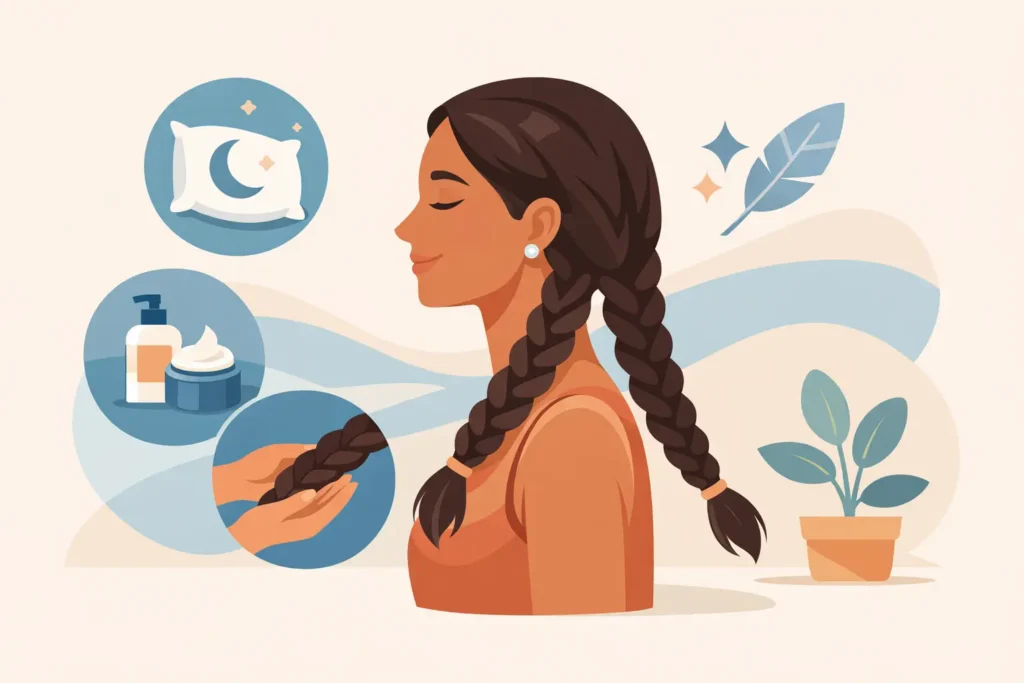
A fresh braid install should still look intentional weeks later, not fuzzy at the roots, dry at the ends, or painfully tight by day three. Knowing how to make braids last starts before you ever wrap your hair at night. It is about choosing a healthy installation, giving your scalp consistent care, and protecting the details that make your style feel like a masterpiece.
Whether you are wearing knotless braids, bohemian braids, Fulani-inspired looks, twists, or a custom classic style, longevity should never require you to ignore discomfort. A style that lasts beautifully is one that stays clean, moisturized, and comfortable from your first selfie to take-down day.
Start With an Installation That Respects Your Hair
The longest-lasting braid styles begin with precise parting, balanced section sizes, and proper tension. When braids are installed too tightly, your scalp may feel sore, itchy, or bumpy right away. That is not a sign that the style is secure. It is a signal that your hairline and follicles are under more stress than they should be.
A skilled braid specialist creates a secure foundation without pulling every strand to its limit. Neat parts also matter more than most people realize. Clean sectioning keeps the style organized as your natural hair grows, helps prevent unnecessary tangling, and gives the finished look that polished, premium feel for longer.
Come to your appointment with clean, detangled hair whenever your stylist requests it, and be honest about sensitive areas, thinning edges, or a scalp that gets dry easily. Your braid plan can be adjusted. Smaller braids may last longer in some cases, but they also take more time to install and can feel heavier if the added hair is not selected thoughtfully. The best choice depends on your hair density, lifestyle, and the look you want to wear.
How to Make Braids Last With Scalp Care
Your scalp is still skin, even when it is tucked beneath a gorgeous protective style. Letting sweat, product buildup, and dry skin sit for weeks can lead to itching, flakes, odor, and a style that looks tired before its time.
Keep scalp products light. A few drops of a braid-friendly scalp oil or a lightweight conditioning scalp mist once or twice a week is often enough. Focus on the exposed scalp between your parts instead of coating the length of every braid. Heavy grease can attract buildup and make braids look dull or feel sticky.
If you work out regularly, spend time outdoors in humid weather, or naturally have an oilier scalp, cleanse your scalp gently every one to two weeks. Use a diluted shampoo or a braid-safe cleansing foam, applying it directly to the scalp with the pads of your fingers. Avoid rough scrubbing or bunching the braids together. Rinse carefully, then make sure your scalp and braids dry completely. Going to bed with damp braids can create an unpleasant smell and leave the hair more vulnerable to frizz.
Dryness and buildup can look similar, but they need different care. If you see light flakes and feel tightness, add moisture before adding more oil. If your scalp feels coated or itchy after styling products, cleanse it rather than layering on another product. Giving your scalp what it actually needs keeps your protective style feeling fresh.
Protect Your Braids Every Night
Your pillowcase can quietly undo a week of good braid care. Cotton pulls moisture from the hair and creates friction, which leads to fuzziness around the roots and rough-looking braid lengths. Satin or silk is the better move for protecting your finish.
Wrap your braids in a satin scarf, place them inside an oversized satin bonnet, or use a satin pillowcase as backup. For long braids, gather them gently into a loose low ponytail before covering them. Do not pull them into a tight bun or high ponytail every night, especially during the first week when your scalp is still adjusting.
Boho and curly braid styles need extra attention at bedtime. Separate the loose curls with your fingers, lightly mist them if they feel dry, and loosely braid or twist the curl sections in larger groups before putting on your bonnet. This small habit helps prevent the curls from matting into one another while keeping their soft, romantic shape intact.
Keep Frizz From Taking Over
A little softness at the roots is normal as your natural hair grows. Trying to eliminate every flyaway with too much gel, mousse, or edge control usually creates buildup and makes the style look less fresh. The goal is refined, not stiff.
Use a small amount of mousse only when your braids need it, then tie a satin scarf around the hairline for a few minutes to set the look. For individual flyaways, smooth them gently with your fingertips rather than brushing aggressively through the braid. Repeated brushing can loosen the installation and cause unnecessary frizz.
Be mindful of how you wear your braids during the day, too. Constantly flipping them, twisting the ends, or running your hands through curly pieces can shorten the life of the style. A statement braid look is made to move, but it does not need to be handled all day.
Give Your Edges a Break
Your edges are delicate, and protective styling should protect them. Avoid tight ponytails, slick buns, and daily updos that pull on the same areas. If you want a lifted look for work, dinner, or a special event, switch the placement of your ponytail and keep it loose at the base.
Use edge control sparingly and remove it gently during your regular scalp cleanse. A soft edge brush and a small amount of water are usually kinder than repeatedly layering product over product. If your hairline feels tender, has visible bumps, or hurts when you touch it, take the pressure off immediately. A beautiful style should help you show up and slay, not make you dread moving your head.
Care for Curly and Human Hair Details
Bohemian braids, French curls, gypsy braids, and other curl-forward styles have a different maintenance rhythm than straight-end braids. The loose hair is what gives the style its luxury movement, but it also needs gentle detangling to stay defined.
Use your fingers to separate curls several times a week, starting near the ends and working upward. If a section begins to knot, add a little water or a light leave-in spray and patiently ease it apart. Do not rake a fine-tooth comb through curly added hair. It can pull out curl definition, cause shedding, and leave the style looking thin.
High-quality human hair can elevate the finish and offer more natural movement, but it is not maintenance-free. Treat it like delicate hair: keep products light, avoid excessive heat, and protect it at night. Synthetic curl pieces may require even more restraint with product and heat, so ask your stylist what was used in your installation before trying a trending curl refresh routine at home.
Know When It Is Time to Take Them Down
Most braid styles look their best for several weeks, but the right take-down date is personal. Your natural growth rate, scalp health, braid size, curl type, and daily routine all play a role. Smaller knotless braids may remain neat longer than larger braids, while a full boho look may need curl refreshing sooner even if the braided base still looks good.
Do not keep a style in simply because it still photographs well. Significant new growth, persistent itching, matting at the roots, excessive buildup, or tension around the hairline are all reasons to schedule take-down. Leaving braids in too long can create knots and make your next wash day far more difficult.
When you remove them, take your time. Detangle each section before shampooing, cleanse thoroughly, and follow with a moisturizing deep conditioner. Your hair deserves recovery time before its next transformation.
The secret to braids that stay beautiful is not overloading them with products or pulling them tighter. It is steady, gentle care that protects your scalp, your edges, and the artistry of the install. Give your style that kind of attention, and every week can still feel worthy of the mirror, the camera, and the moment.