
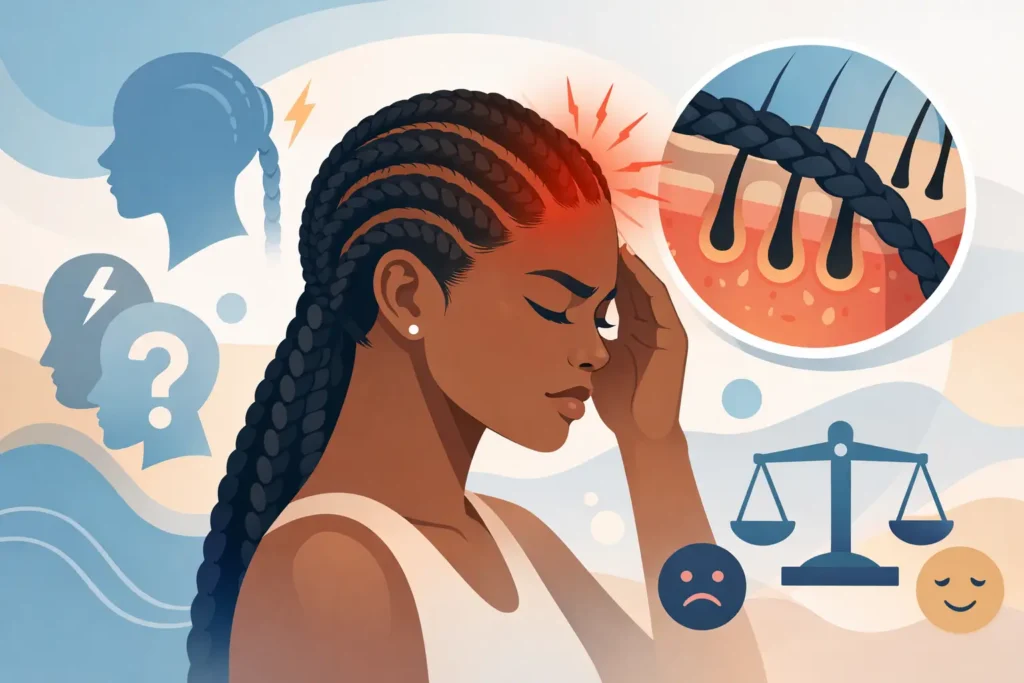
Your new braids should make you feel polished, protected, and ready to show up and slay – not afraid to turn your head, smile, or rest against a pillow. Braid scalp pain is one of the clearest signals your style may be too tight, too heavy, or irritating your skin. A little awareness after a fresh install can happen, especially if your hair has been worn loose for a while. Pain, throbbing, headaches, or tender bumps are not the price of a beautiful protective style.
The goal is never to choose between a flawless finish and your hair health. With thoughtful parting, appropriate extension weight, and scalp-friendly tension, braids can look elevated while still allowing your scalp to breathe.
What Braid Scalp Pain Can Feel Like
Not all discomfort means the same thing. Mild tightness can feel like a light pulling sensation in the first day or two, particularly around areas that are naturally more sensitive, such as the nape, temples, and hairline. It should ease rather than intensify, and it should not interfere with sleeping, working, or touching your scalp.
Problematic braid scalp pain tends to be more persistent and more specific. You may feel sharp pulling in certain sections, burning, itching that feels deeper than ordinary dryness, or a headache that starts soon after your appointment. Some clients notice tiny raised bumps around the hairline or part lines. Others see redness, swelling, or a shiny, overly stretched appearance of the scalp.
Your body does not need to “get used to” severe tension. If you cannot gently move your head without pain, your braids are communicating something worth addressing.
Why Braids Can Hurt
Tension that is too high
The most common cause is installation tension. When hair is pulled too firmly at the root, the follicle experiences ongoing stress. This may happen anywhere on the head, but it is especially risky along fragile edges and the nape, where the hair is often finer.
A sleek look does not require a painful grip. Precision comes from clean parting, consistent braid technique, and a stylist who adjusts tension to your hair density and scalp sensitivity. Tightness may look crisp on day one, but it is not a marker of quality when it leaves your scalp sore.
Extensions that are too heavy
Length, added hair quantity, curled ends, and accessories all affect the weight your natural hair is carrying. Extra-long bohemian braids with generous human-hair curls can be stunning, for example, but the amount of hair used must match the strength of your natural hair and the size of each section.
Smaller braids are not automatically better, either. Very tiny sections can create more pull if they are loaded with too much extension hair. A premium install considers the whole balance: braid size, length, density, curl placement, and your own hair’s capacity.
A sensitive, dry, or irritated scalp
Sometimes the braids are reasonably installed, but the scalp is already reactive. Product buildup, dry skin, eczema, psoriasis, recent coloring, or scratching before an appointment can make any tension feel more intense. Certain extension fibers or styling products may also trigger contact irritation in sensitive clients.
This is where a real consultation matters. Let your braider know if you have a tender area, a history of edge breakage, scalp conditions, or a style that caused pain in the past. That information helps shape the size, length, and tension of your install.
The style is being pulled after the appointment
A comfortable install can become uncomfortable when it is constantly pulled into a high bun, tight ponytail, or half-up style. Fresh braids have less flexibility at the root, so give them a few days before creating high-tension updos. Sleeping with loose braids pulled behind your head can also create pressure at the nape.
What to Do When Your Braids Hurt
Start by being honest about the level of pain. If the style feels mildly snug but gets better each day, a few gentle adjustments may be enough. Use a cool compress over sore areas for short intervals, keep your scalp clean, and avoid piling the braids on top of your head. Do not use heavy oils or layers of product to mask pain. They can create buildup without solving the tension at the root.
If a few braids are clearly causing the issue, they may need to be loosened or removed. Do not try to forcefully pull the braid away from the scalp or cut near your natural hair. Contact the stylist promptly and explain exactly where the pain is occurring. A professional should be willing to assess the concern and make a safe adjustment when needed.
If the entire style feels painfully tight, do not wait several days hoping it will settle. Earlier action gives your hairline and follicles the best chance to recover. Severe tension can contribute to breakage and, over time, traction alopecia, which is hair loss caused by repeated pulling on the follicle.
Seek medical advice from a dermatologist or other qualified healthcare professional if you have pus-filled bumps, spreading redness, significant swelling, scabbing, fever, sudden hair loss, or pain that continues after the braids are removed. Those signs can point to infection, inflammation, or another scalp condition that deserves more than a home remedy.
Signs Your Braids Need Attention Now
A beautiful style should feel secure, not restrictive. Reach out to your stylist or remove the painful sections if you notice any of the following:
- Headaches, throbbing, or burning that begins after installation or worsens over time
- Visible bumps, redness, swelling, or stretched, shiny skin around the parts or hairline
- Pain when you lightly touch, move, or lie on the braids
- Edges that look pulled upward, sparse, or unusually stressed
- Tingling, numbness, or pain concentrated in one area
These are not signs that your braids are “fresh.” They are signs that the scalp needs relief.
How to Prevent Scalp Pain at Your Next Appointment
The best time to advocate for comfort is before the first braid is installed. Arrive with a clean scalp when your service instructions call for it, and mention any tender spots or previous tension issues. Be specific about your lifestyle, too. If you wear your hair up for work, exercise often, or know you are sensitive around the temples, your stylist can plan a style that supports that reality.
Choose a length and fullness that make sense for your natural hair. A waist-length look may be your dream style, but a slightly shorter version or a larger braid size may serve your scalp better. That is not settling. It is customization, and customization is where a braid style becomes truly yours.
During the appointment, speak up early. You do not need to wait until the style is finished to say that a section feels too tight. A quick adjustment in the chair is much easier than managing days of discomfort later. A skilled stylist welcomes clear communication because your comfort is part of the finished masterpiece.
At Braids by Blinky, the beauty is in the details: neat sections, fashion-forward finishes, and intentional tension that respects your natural hair. Whether you choose knotless braids, Fulani-inspired details, island twists, or a soft boho look, the right technique should leave you feeling confident from your scalp to your ends.
Your protective style should protect your peace, too. Choose the look you love, say something the moment comfort changes, and let healthy, comfortable braids be part of the standard – never an extra.