
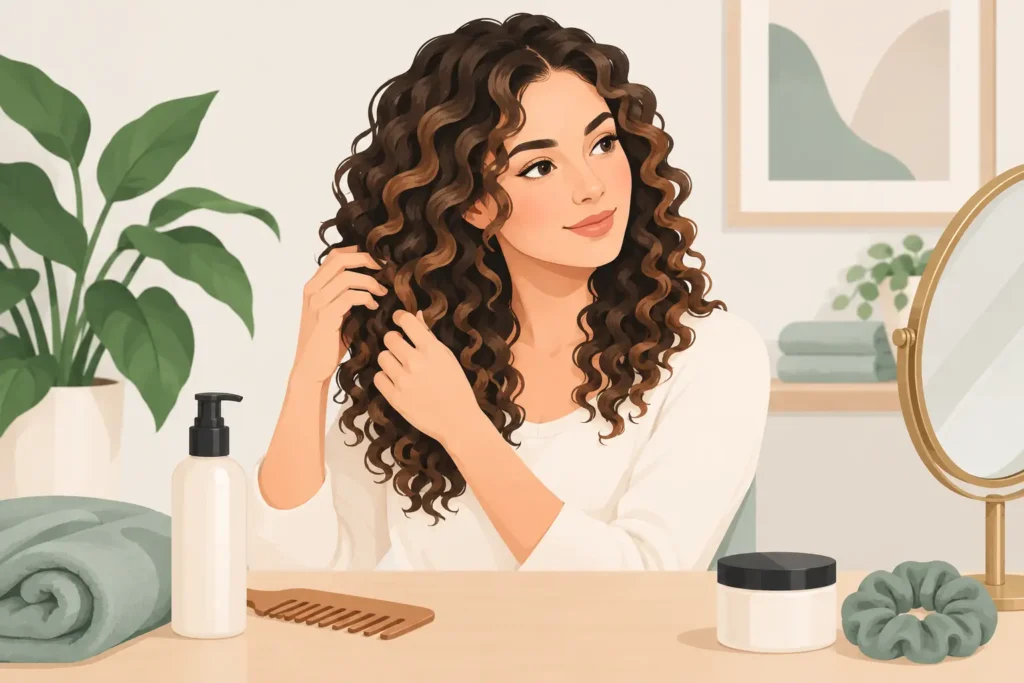
French curls give you the best of both worlds: polished braids at the root and soft, romantic movement through the ends. But that airy, luxurious finish needs a little intention to stay looking fresh. Knowing how to maintain French curls means protecting the curl pattern, keeping your scalp comfortable, and preventing the frizz and tangling that can make a beautiful install look tired too soon.
The goal is not to keep every curl perfectly frozen in place. French curls are meant to have softness and personality. The key is preserving that effortless look without letting the style become dry, matted, or weighed down.
Start With a Gentle Daily Routine
Your French curls do not need a long product routine every morning. In fact, too much product is one of the quickest ways to make curly ends stiff, dull, or sticky. A light touch wins every time.
In the morning, separate the curls gently with clean, dry fingers. Start near the ends and work upward, especially if a few pieces have joined together overnight. Do not rake through the curls aggressively or pull a brush through them. French curl hair can become fluffy when it is overworked, and repeated pulling can create unnecessary tension at the braid.
If your ends look a little dry, apply a small amount of lightweight curl mousse or a braid-friendly foam to your palms first, then smooth it over the curls. Focus on the areas that need it rather than coating the entire style. Let the product dry fully before touching the curls again.
For the braided portion, use a light scalp oil only when your scalp actually feels dry. A few drops along the parts are enough. Heavy oils can travel down the braids, collect dust, and leave the curls looking greasy instead of glamorous.
Protect French Curls While You Sleep
Nighttime is where your maintenance routine really earns its place. Cotton pillowcases pull moisture from hair and create friction, which can turn defined curls into a frizzy cloud by morning.
Gather your braids loosely into a high ponytail or two loose sections before bed. This keeps the curls from being pressed underneath your body or rubbing against each other all night. Use a satin or silk scrunchie, not a tight elastic that can dent the braids or snag the hair.
Cover the style with a satin bonnet or scarf, making sure the curls fit comfortably inside without being crushed. If your French curls are extra long or full, a large bonnet is worth it. You can also sleep on a satin pillowcase as a backup for the nights your bonnet decides it has other plans.
In the morning, release the hair slowly, shake the curls into place, and separate only where needed. That small ritual can make the difference between a style that stays polished for weeks and one that starts losing its shape after a few nights.
Keep Moisture Balanced, Not Heavy
French curls need moisture, but they do not need to be constantly wet. Over-spraying the curls with water, leave-in conditioner, or shine spray can change the texture of extension hair and encourage tangling. This is especially true with synthetic curl blends.
A light water-based braid spray can be used sparingly on the braided sections if they feel dry. For the curled ends, choose a mousse or foam made for defining and refreshing hair rather than a thick cream. Work with small amounts and build only if needed.
The best product choice depends on the hair used for your install. Human hair curls generally respond well to lightweight hydration and careful detangling, while many synthetic French curl textures do better with minimal moisture and less manipulation. If you are unsure, follow the care instructions from your stylist instead of experimenting with several new products at once.
Detangle Before Small Knots Become Big Problems
A little tangling is normal with loose curls. Waiting until the ends are fully knotted is what creates trouble. Check your curls every few days, especially at the nape of your neck, around your shoulders, and near the ends where friction happens most.
Use your fingers to gently pull apart strands that have started wrapping around one another. If you need extra slip, apply a tiny amount of mousse and let it soften the area before separating it. Be patient. Pulling hard at a knot can loosen the braid, snap the extension hair, or create discomfort at the root.
Avoid fine-tooth combs and standard brushes on the loose curl section. They can remove the shape you paid for and leave the ends puffy. A wide-tooth comb may be helpful for certain human hair installs, but only if your stylist has confirmed it is appropriate for your curl texture.
Refresh the Curls Without Overdoing It
Some days your French curls may look a little less defined, especially after a busy week, a humid commute, or a long night out. A gentle refresh can bring them back to life.
First, separate any tangles with your fingers. Then apply a light foam to the curls in sections, scrunching upward softly to encourage the pattern. Let the hair air-dry completely. Touching it while it is drying can create frizz, so give it a little space to set.
Be careful with heat. High heat can permanently alter synthetic fibers, while frequent curling irons can dry out human hair ends. If your style includes human hair and heat is approved by your stylist, use a low setting with heat protectant and work in small sections. If the hair is synthetic, do not assume heat is safe just because it looks like human hair. The fiber type matters.
Wash Your Scalp the Smart Way
A clean scalp helps your protective style feel better and last better. You do not need to soak French curls every week, but you should not ignore buildup, sweat, or itchiness either.
When it is time to cleanse, dilute shampoo with water in an applicator bottle and apply it directly along your parts. Massage gently with the pads of your fingertips, never your nails. Rinse carefully, keeping the loose curls as controlled as possible.
Follow with a light conditioner or scalp rinse only if needed, then gently blot the braids and curls with a microfiber towel or soft T-shirt. Do not rub. Make sure the roots dry completely, because leaving a braided style damp for hours can cause odor, buildup, and scalp irritation.
If you work out often, wrap your hair in a sweat-wicking headband during exercise and let your scalp air out afterward. A light scalp refresher may be enough between washes. After swimming, rinse your hair as soon as possible, especially after chlorine or saltwater exposure, and follow up with a gentle cleansing routine.
Watch the Roots and Listen to Your Scalp
A protective style should feel secure, not painful. Mild tenderness right after an install can happen, but ongoing soreness, bumps, headaches, or thinning around the hairline are signs to take seriously. Do not try to power through discomfort for the sake of a cute style.
Keep your edges low-manipulation. Skip tight ponytails, high buns, and repeated slicked-back looks that pull against the front braids. French curls already make a statement, so let the style hang loose when you can. Your scalp will thank you.
If a braid begins slipping, fraying, or feeling unusually tight, have it addressed early. A quick professional touch-up is far better than trying to pull, cut, or reinstall pieces yourself. At Braids by Blinky, the focus is always a beautiful finish that respects your natural hair and your comfort.
How Long Should French Curls Last?
Most French curl styles can look their best for several weeks with the right maintenance, but the exact timeline depends on your hair growth, curl texture, daily routine, and how much loose hair is included in the style. Clients who sleep with satin protection, avoid heavy products, and detangle gently usually get more polished wear.
The curls may begin to lose definition before the braided base is ready to come down. That does not always mean the whole style is finished. A careful refresh, light trim of overly frizzy ends, or professional touch-up may extend the look. If the roots are very grown out, the curls are matted, or your scalp needs a reset, it is time to remove the style with care.
French curls are made for soft glam, confidence, and turning an everyday outfit into a full look. Treat them gently, protect them at night, and let a little lived-in movement be part of the beauty. The best French curls do not look overworked – they look like you woke up ready to show up and slay.