
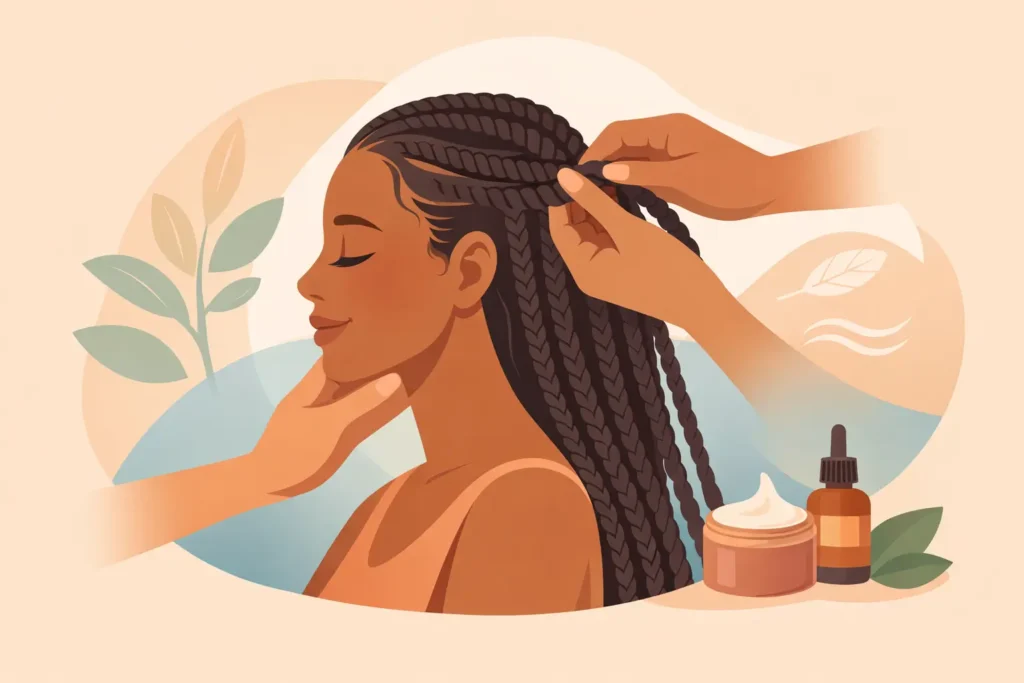
A beautiful install should not come with a headache, burning edges, or that tight feeling you hope will “settle down” after a few days. Braid extensions for sensitive scalps are absolutely possible, but comfort begins long before the final braid is dipped or the curls are added. It comes down to thoughtful prep, clean parting, the right extension hair, and an installation that respects your scalp from the first section to the last.
Sensitive does not mean you have to skip the styles you love. You can still show up in knotless braids, bohemian braids, Fulani-inspired looks, twists, or soft French curls with a polished finish. The difference is choosing a stylist and a plan that prioritize your hair health as much as the final photo.
Why Braids Can Feel Uncomfortable
Scalp tenderness can have several causes, and not all discomfort comes from the same place. Sometimes the braids are installed too tightly at the root. Other times, the weight of added hair creates a constant pull, especially around the hairline and crown. A dry or irritated scalp, product buildup, recent chemical services, and even a naturally tender scalp can make a standard installation feel much more intense.
There is also a difference between being aware that you have a fresh style and being in pain. A new install may feel slightly snug for a day, particularly if your hair was freshly stretched or you are not used to extensions. Sharp pain, throbbing, bumps, persistent itching, or braids that visibly pull the skin are not signs that a style is “getting secure.” They are signs to speak up.
The goal is not loose, messy braids that fall apart early. It is secure installation with balanced tension. Precision parting and consistent braid size help create longevity without asking your roots to carry more than they should.
The Best Braid Extensions for Sensitive Scalps
For many clients, knotless braids are a strong starting point. Because extension hair is fed in gradually rather than anchored with a pronounced knot at the base, knotless styles can feel lighter and more flexible at the roots. They are not automatically tension-free, though. Hair quantity, braid length, section size, and the installer’s technique still matter.
Medium or large braids are often more comfortable than extremely small braids when sensitivity is a major concern. Tiny parts can look beautiful and give a detailed finish, but they may require more tension and take longer to install. If your scalp gets sore easily, a medium knotless set can offer that neat, luxury look while placing less demand on each section of natural hair.
Twists can also be an excellent option. Senegalese twists and island twists create movement and fullness, and a properly installed set can feel beautifully lightweight. The same principle applies: avoid making the parts too small for the amount of hair being added. A fuller extension look is not worth stress at the root.
Bohemian styles deserve a little extra planning. The braided foundation may feel comfortable, but the added curls can increase overall weight. Choosing a reasonable length, using quality hair, and placing curly pieces strategically helps preserve that soft, elevated look without turning your install into a heavy style. If you love waist-length drama, consider fewer curls or a slightly larger braid size to keep the balance right.
Length and weight matter more than most people think
Long braids are stunning, but every added inch changes the load on your scalp. This does not mean sensitive-scalp clients can only wear short styles. It means the braid size and extension amount should work with the chosen length. A long style with too much hair packed into small sections can pull even when the individual braids look neat.
During a consultation, be honest about what has hurt in the past. Mention whether your edges are tender, whether you get headaches after installs, or whether certain areas like your nape or crown are more sensitive. Those details help shape a custom approach instead of repeating the same uncomfortable experience.
What a Scalp-Friendly Installation Looks Like
The best protective styles begin with a clean, thoughtfully prepared foundation. Your hair should be detangled gently, moisturized appropriately, and stretched in a way that does not create unnecessary tension. Starting with snarls or excessive dryness makes every part of the service harder on your strands and scalp.
Neat parting is more than an aesthetic detail. Clean, evenly sized sections distribute tension more consistently, making it easier to control how much hair each braid carries. When parts are rushed, uneven, or too small, some areas can end up supporting far more extension hair than others.
A scalp-friendly stylist also checks in throughout the appointment. You should feel comfortable saying, “That section feels tight,” before the braid is finished. It is much easier to adjust a section in the chair than to spend the next week trying to sleep through discomfort. At Braids by Blinky, comfort and precision belong in the same conversation because a polished result should let you move through your day feeling confident, not restricted.
Your hairline deserves special care. Baby hairs and temple areas are naturally finer for many people, so they should not be asked to hold the same weight as the stronger hair at the center of your head. Leaving delicate areas out, using less extension hair, or choosing a gentler size around the perimeter can protect the look and the integrity of your edges.
How to Prepare Before Your Appointment
Come in with a clear picture of your recent hair history. If you have taken down a tight style, colored your hair, used a relaxer, experienced shedding, or have active scalp irritation, say so. A style may need to be modified, postponed, or designed around the areas that need a break. That is not a setback. It is smart protective styling.
Avoid aggressively scratching or picking your scalp right before your appointment. If you deal with flakes or itchiness, cleanse your scalp in advance with products that work for you, then follow with light moisture. Heavy oils, waxes, and thick buildup can make the roots slippery and leave the scalp feeling coated once extensions are installed.
Bring inspiration, but stay open to professional adjustments. The exact braid size or length in a photo may not be the best choice for your density, scalp sensitivity, or lifestyle. A customized version can still give you the same beautiful energy while feeling much better to wear.
Caring for Your Braids Without Creating More Irritation
Once your style is installed, give it a gentle first few days. Avoid tight ponytails, buns, and updos that pull the fresh braids backward. Let the roots rest before styling them into a high, snatched look. A loose low ponytail or leaving your braids down is often the kinder choice at the beginning.
Keep the scalp clean without overloading it with products. Use a light scalp mist or a small amount of scalp-friendly oil if dryness is your issue, focusing on the skin rather than saturating the braids. If product makes you itch, less is usually more. Product buildup can trap sweat and make sensitivity feel worse, especially during warmer DMV days or after workouts.
At night, protect the style with a satin or silk scarf, bonnet, or pillowcase. This reduces friction, helps preserve neatness, and can prevent the extra tugging that happens when braids catch against cotton. If your braids are long, gather them loosely rather than tying them tightly at the crown.
Know when to take the style down
Do not wait for discomfort to become damage. Remove the style or schedule a professional assessment if you notice red bumps, shiny or raised skin around the parts, worsening pain, excessive shedding, or thinning at the edges. A protective style only protects when it is installed and maintained with care.
It is also wise to give your hair breaks between installs, especially after wearing a long or detailed style. Your scalp gets to reset, and you get a clearer view of your natural hair’s condition before choosing the next look.
Your next braid appointment should feel like a beauty experience, not a test of endurance. Choose the style that fits your vision, speak up about your sensitivity, and let comfort be part of what makes you feel ready to show up and slay.