
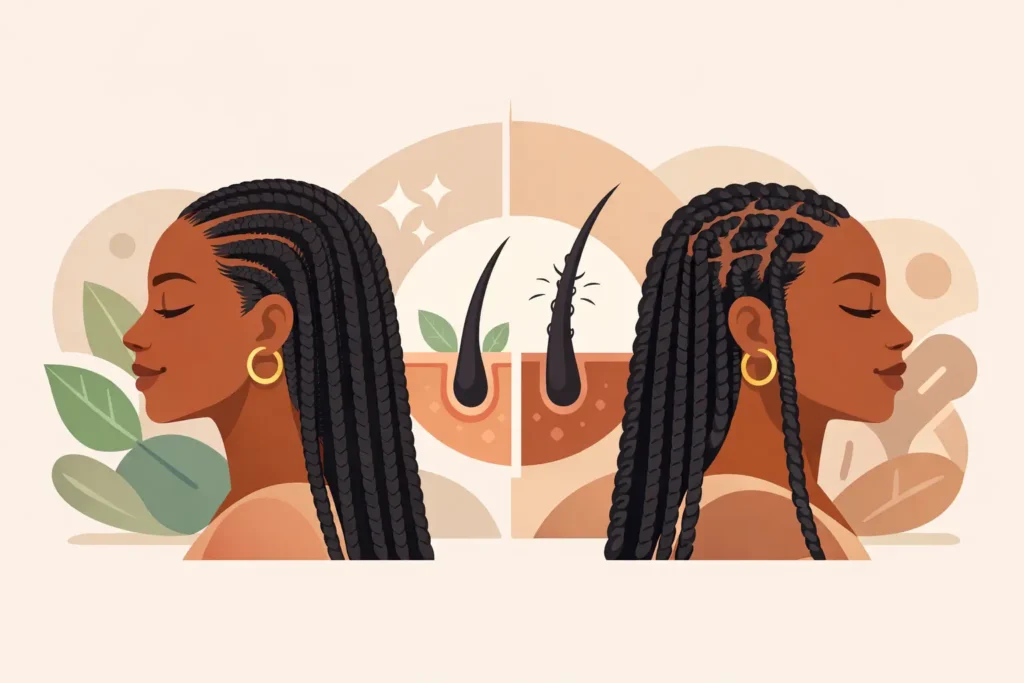
That first-night feeling matters. If your braids are so tight that smiling, sleeping, or putting your hair in a bun hurts, the style is not serving the soft, confident energy you booked it for. So, are knotless braids better? For many clients, yes – especially when comfort, natural-looking movement, and lower tension at the scalp are priorities. But “better” depends on your hair, lifestyle, budget, and the quality of the installation.
Knotless braids have earned their place as a premium favorite because they can look beautifully polished without the bulky, anchored feeling some people associate with traditional box braids. Still, no braid style is automatically protective simply because of its name. Neat parting, balanced braid size, healthy prep, and a stylist who respects your edges are what turn a gorgeous look into a truly scalp-conscious one.
Why Knotless Braids Feel Different
Traditional box braids begin with a small knot at the base, where extension hair is secured close to the scalp before the braid continues. Knotless braids use a feed-in technique instead. Your natural hair is braided first, then extension hair is gradually added as the braid travels down.
The result is a flatter, more natural-looking base. Instead of seeing a distinct knot at each part, you get braids that appear to flow right out of the scalp. This is especially striking with clean, precise sections, whether you choose a classic center part, a side part, medium squares, or a soft bohemian finish.
That feed-in method is also why many clients describe knotless braids as lighter and more comfortable during the first few days. There is often less immediate pulling at the root, which can make a real difference for tender scalps, fine hairlines, or anyone who has had one too many too-tight installs.
Are Knotless Braids Better Than Traditional Box Braids?
For scalp comfort, knotless braids often have the advantage. Because the extension hair is not knotted directly at the base, the braid can sit with less tension when it is installed correctly. They are also easier to style into ponytails, half-up looks, and buns soon after your appointment because the roots tend to be more flexible.
For a sleek, natural finish, knotless braids are often the clear winner. The bases are less bulky, and the style has a beautiful movement that works just as well for an office week as it does for vacation photos or a birthday look. Add curls, human hair accents, or boho pieces, and the result can feel especially elevated.
However, traditional box braids are not a bad choice. A skilled stylist can install them neatly with appropriate tension, and some clients prefer their fuller base and familiar structure. They may also be a practical option when you want a more budget-conscious install or love a bold, classic braid look.
The honest answer is that knotless braids are better for many people, not every person. If your main goal is a lightweight feel and a refined scalp finish, they are likely a strong match. If you prefer a classic look, need a quicker service, or are working within a firmer budget, traditional box braids may still make sense.
The Hair-Health Question Is About Tension
Knotless braids are often called healthier, but the technique alone cannot protect hair from excessive tension. A braid can be knotless and still be too small, too heavy, or pulled too tightly around fragile areas. Edges, temples, and the nape deserve special care, particularly if you have experienced breakage, postpartum shedding, thinning, or scalp sensitivity.
A scalp-friendly install should feel secure, not painful. Mild awareness on day one can happen, especially if you are not used to braids, but throbbing, bumps, headaches, stinging, or visible pulling are signs that the tension needs attention. Do not wait and hope it settles. Your comfort is part of the service, not a bonus.
Hair prep matters too. Starting with a clean scalp, detangled hair, and moisturized strands helps create a better foundation. Your stylist should also choose a braid size that makes sense for your density and hairline. Tiny braids with a lot of added hair may look dramatic, but they are not always the best choice for every head of hair.
What to Expect for Time, Cost, and Longevity
Knotless braids usually take longer to install than traditional box braids because every braid is built gradually. That detailed work is part of what gives the style its smooth, natural base. It can also mean a higher price, particularly for small sizes, extra length, custom parting, curls, or premium human hair finishes.
Longevity varies by braid size, your daily routine, and how well you care for the style. Medium knotless braids may stay looking fresh for several weeks, while smaller braids can last longer but require more appointment time and more maintenance at the scalp. Boho knotless styles are stunning, but loose curls naturally need more refreshing than a fully braided finish.
Do not judge longevity only by how long the braids remain attached. Once new growth becomes excessive, the style feels heavy, or your scalp needs a thorough cleanse and reset, it is time to remove them. Keeping any braid style far past its best window can lead to tangling at the roots and unnecessary shedding during takedown.
Who Will Love Knotless Braids Most?
Knotless braids are an especially beautiful option if you want a polished protective style that does not feel stiff at the scalp. They work well for clients who wear their braids up often, want an easy transition from casual to dressed up, or prefer a look that photographs cleanly from every angle.
They can also be a thoughtful choice for clients who have had uncomfortable braid experiences in the past. A personalized consultation is valuable here. Your stylist can discuss braid size, length, density, color blends, curl placement, and the areas of your scalp that need a lighter hand.
If you are choosing between knotless braids and a statement style like Fulani-inspired braids, French curls, or island twists, think about your real schedule. Do you need a sleek low-maintenance look for work? Do you want soft curls for an event? Will you be swimming, traveling, or working out frequently? The best style is the one that fits your life and still makes you feel like a masterpiece.
How to Keep Your Knotless Braids Looking Fresh
A beautiful install deserves simple, consistent care. Protect your braids at night with a satin scarf, bonnet, or satin pillowcase to reduce friction and preserve the smoothness at the roots. Keep your scalp clean without drenching the style too often, and use a lightweight scalp product only as needed. Heavy buildup can make braids look dull and leave the scalp itchy.
Be mindful of constant tight ponytails. Knotless braids make updos easier, but wearing any style pulled back in the same position every day can still stress the hairline. Switch your part, vary your bun placement, and give your edges a break.
For boho pieces or human hair curls, separate gently with your fingers and refresh only when necessary. Over-brushing can create frizz, while too much product can weigh the curls down. A little care keeps the finish soft, intentional, and camera-ready.
The Better Choice Is the One Installed for You
Knotless braids are not magic, but they are a beautiful upgrade when you want flexibility, a natural base, and a lighter feel. Their real value comes from thoughtful technique: clean parts, controlled extension placement, balanced weight, and tension that respects your scalp from the first braid to the last.
At Braids by Blinky, the goal is never just to send you out with a pretty style. It is to create a look that feels as good as it looks, so you can show up, move freely, and slay with confidence. Choose the braid style that honors your hair, fits your lifestyle, and makes you excited to catch your reflection.