
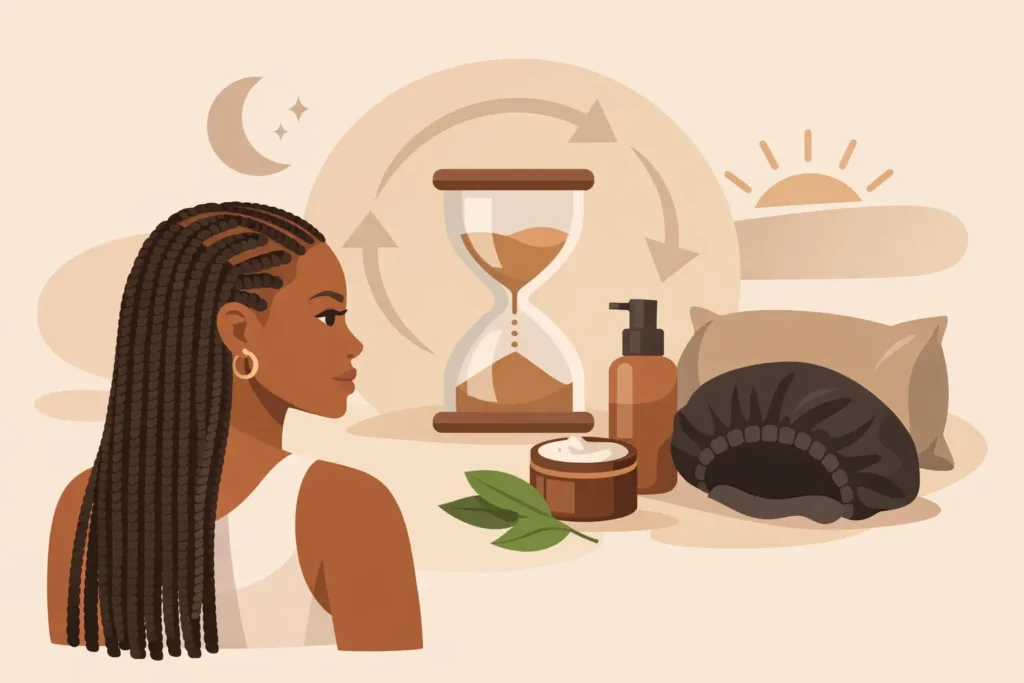
Fresh knotless braids have a certain kind of power: clean parts, a lightweight feel, and a polished finish that makes getting dressed easier. So, how long do knotless braids last once you leave the chair? For most clients, a professionally installed knotless style lasts about four to six weeks. With excellent maintenance and a slower rate of new growth, some styles can look presentable for up to eight weeks, but that does not always mean your natural hair or scalp should stay braided that long.
The goal is not simply to stretch your appointment. It is to enjoy a beautiful protective style while keeping your edges, scalp, and strands in a healthy place. A style that still looks cute at week seven may be ready to come down if the roots are matted, the braids are slipping, or your scalp feels unhappy.
How Long Do Knotless Braids Last in Real Life?
Four to six weeks is the sweet spot for most knotless braid sizes, lifestyles, and hair textures. Small knotless braids tend to last longer visually because there are more braids and less exposed parting. Medium braids are a favorite for good reason: they offer a gorgeous balance of fullness, install time, comfort, and longevity. Large knotless braids can be sleek and statement-making, but they may show new growth and loosen sooner.
The timeline also changes based on the finish you choose. Classic knotless braids usually hold their neat look longer than bohemian knotless braids. Boho curls bring softness, movement, and that effortless vacation energy, but loose curly pieces naturally require more daily attention and may frizz before the braided base does. If you choose a premium human hair blend for your curls, gentle detangling and moisture care make a noticeable difference in how refined the style stays.
Your hair growth matters, too. If your hair grows quickly, you may see a fuller root area after two or three weeks. That is completely normal. New growth does not mean the installation failed. It simply means your natural hair is doing what it is supposed to do.
What Determines How Long Your Braids Stay Neat?
A long-lasting knotless install begins before the first braid is added. Clean hair, properly prepared strands, precise parting, and balanced tension create the foundation. Knotless braids are designed to begin with your natural hair before extension hair is gradually fed in. That technique can feel lighter and more flexible than a traditional knotted base, especially when it is installed with care.
Still, knotless does not mean no maintenance. Sweat, product buildup, humidity, sleeping habits, and frequent styling all affect the look of your braids. A client who works out several days a week may need more scalp cleansing than someone with a lower-sweat routine. A beach trip, a pool weekend, or a particularly humid Maryland summer can also create more frizz around the roots and hairline.
The size and length of the braids matter as well. Longer braids can create more movement and weight, particularly when they are wet. Very small braids offer a detailed, luxe look, but they should never be installed too tightly just to make them last longer. Healthy tension is part of premium braid work. A protective style should let you show up and slay, not leave you counting down the hours until the discomfort stops.
Signs It Is Time to Take Knotless Braids Down
Do not use the calendar as your only guide. Your scalp and natural hair will tell you more than a date ever can. It is time to plan your takedown when your roots are excessively tangled, the braids have slipped far from the base, or you are seeing significant buildup that will not lift with gentle cleansing.
Persistent itching, soreness, redness, bumps, or tenderness are also signs to act sooner. A little mild itch can happen with any style, especially in the first few days or when your scalp is dry. Pain is different. Do not push through a style that feels too tight or irritated in the hope that it will settle down.
Pay attention to the hairline, too. If your edges are being pulled by high buns, tight ponytails, or a braid that has started to hang heavily, give them a break. Protective styling is most protective when it respects the delicate areas around your face and nape.
How to Make Knotless Braids Last Longer
The best maintenance routine is simple enough to follow consistently. Start by protecting your braids at night. Wrap them with a satin or silk scarf, or sleep on a satin pillowcase if scarves tend to come off. This reduces friction, helps preserve your parts, and keeps the braids from becoming fuzzy too quickly.
Keep your scalp clean without overloading it with heavy products. Use a light scalp cleanser or a diluted shampoo applied carefully between the parts when needed, then make sure your braids dry completely. Leaving the base damp for long periods can lead to odor, irritation, and buildup. If you wash your braids, gently squeeze out excess water with a towel rather than rubbing them back and forth.
Moisture belongs in the routine, but a little goes a long way. A lightweight braid spray, water-based leave-in, or small amount of scalp-friendly oil can help with dryness. Thick butters, greasy edge products, and layers of mousse may make the style look shiny for a day, then leave residue at the roots. Choose products that support your scalp instead of coating it.
Be thoughtful with styling. Low buns, loose half-up looks, and relaxed ponytails can switch up your look without constantly tugging at the same section. Avoid pulling your braids into a tight top knot every day, especially if they are long or extra full. Your edges deserve the same care as the rest of your hair.
For bohemian styles, separate and finger-detangle the curly pieces gently when they begin to knot. Do not aggressively brush through them. Add a little water and a light curl-friendly product, then work from the ends upward. Small touch-ups can refresh the curls, but understand the trade-off: the more free hair a style includes, the more maintenance it asks of you.
Can You Keep Knotless Braids for Eight Weeks?
Sometimes, yes. But eight weeks should be the exception, not the automatic plan. If your braids are still clean, your scalp feels comfortable, your roots are not heavily matted, and your hairline is healthy, you may be able to wear them longer. Smaller classic braids often have the best chance of making it to that point.
For many clients, though, taking braids down closer to week five or six is the smarter hair-health decision. Waiting too long can turn a straightforward takedown into a detangling marathon, especially around shed hair that has been held inside the braid. Seeing shed strands during takedown is normal. Seeing excessive breakage from delayed removal is what you want to avoid.
There is also a style question. If your braids no longer make you feel polished and confident, you do not have to wait for the maximum wear time. A fresh install can be part of your reset, whether you are heading into a busy work season, a birthday weekend, a vacation, or simply want that clean-part feeling again.
Give Your Natural Hair a Moment Between Installs
After takedown, cleanse your scalp thoroughly and gently detangle your hair before installing another protective style. A deep conditioning treatment can bring softness and slip back to strands that have been tucked away for several weeks. If your scalp has been sensitive or your edges feel stressed, take a short break and wear a low-manipulation style while everything settles.
At Braids by Blinky, the focus is never just on giving you a beautiful finish for the photos. It is about precision, comfort, and a style that supports your confidence from day one through your final wear. The right knotless braids should look like a masterpiece and feel like you can live your life in them.
Your best braid timeline is the one that keeps your style looking refined and your natural hair feeling cared for. Enjoy the wear, listen to your scalp, and let your next appointment be a fresh celebration of you.