
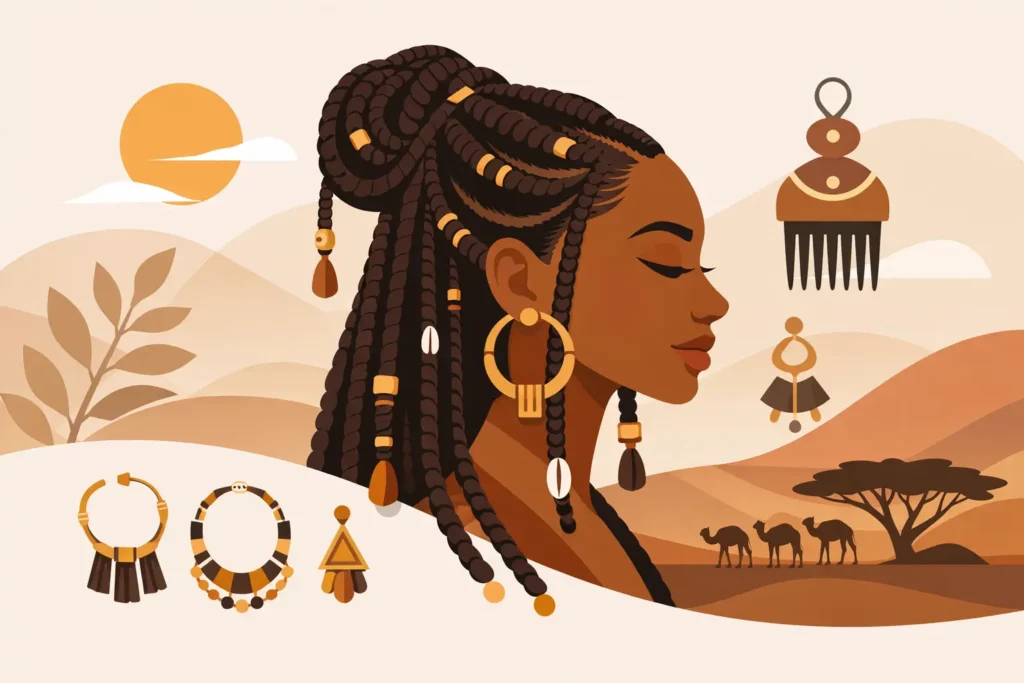
Fulani-inspired braids make an entrance before you say a word. The signature center braid, detailed side patterns, face-framing pieces, and optional beads create a look that feels polished, expressive, and completely yours. This Fulani inspired braids guide will help you choose the right version of the style, prepare your hair thoughtfully, and keep your braids looking fresh without sacrificing scalp comfort.
What Makes Fulani-Inspired Braids Special?
The beauty is in the contrast. Fulani-inspired styles often pair sleek cornrows at the crown with individual braids through the back and sides. A single braid down the center, carefully placed side braids, curved parting, cuffs, beads, and loose curly pieces can all shape the final look. There is room for a minimal, sophisticated finish or a full statement moment.
The style is inspired by traditional Fulani hairstyling, which carries cultural significance and regional variation. A skilled stylist approaches the look with respect, rather than treating every detail as a costume or trend. For clients, that means choosing design elements that feel beautiful and personal while honoring where the inspiration comes from.
Fulani-inspired braids are also wonderfully flexible. You can wear them at a practical medium length for work and everyday errands, choose waist-length braids for drama, or add boho curls for movement and softness. The foundation matters most: clean parts, balanced sections, and tension that protects your edges.
Choose a Version That Fits Your Lifestyle
Before selecting a picture, think beyond the first-day reveal. The best braid style has to work with your schedule, your preferred maintenance level, and how you want to feel wearing it.
A classic Fulani-inspired install is a strong choice if you love a neat, defined finish. It typically features smooth feed-in cornrows, individual braids, and a few intentional accessories. It photographs beautifully, stays polished with the right care, and works for clients who prefer less daily styling.
Boho Fulani-inspired braids bring softness to the structure. Curly human hair pieces are blended through selected braids or left around the face and ends. The result is romantic and fashion-forward, but it does ask for more attention. Loose curls can tangle if they are not separated gently and moisturized with a light hand.
If your priority is a lighter feel, ask about smaller design details with medium-sized individual braids in the back. If you want your parting pattern to be the star, a more detailed crown design may be worth the extra installation time. Neither is automatically better. It depends on whether your everyday life calls for low-maintenance ease, extra volume, or a high-impact finish.
Length, Size, and Accessories Change the Experience
Longer braids offer undeniable drama, but they also add weight. If you are sensitive to tension, work out often, or are new to braided extensions, a shoulder to mid-back length can be a smart place to start. Medium braids generally provide a beautiful balance between fullness, installation time, and easy take-down.
Beads and cuffs should feel secure, never heavy or painful. A few thoughtfully placed accents can elevate the entire style without competing with the braid pattern. Gold cuffs add a clean, luxe touch; clear, wooden, or colorful beads can make the look more playful. Bring inspiration photos, but stay open to your stylist’s recommendation based on your hair density and the structure of the design.
Start With Healthy, Clean Hair
Protective styling begins before the first part is made. Arrive with hair that is clean, fully detangled, and free from heavy product buildup unless your appointment instructions say otherwise. Product residue can make grip less consistent and leave the scalp feeling uncomfortable sooner.
If your natural hair is dry, focus on hydration in the days leading up to your appointment instead of coating it in thick oils the night before. A clean scalp and moisturized strands give your stylist the best foundation for a neat installation. If you have an irritated scalp, active flaking, open areas, or unusual shedding, address that first. Braids should support your hair goals, not push through a problem that needs care.
Be honest during your consultation about sensitivity around your hairline, past experiences with painful braids, and how long you hope to keep the style. This is not being difficult. It is how you get a custom install that feels as good as it looks.
The Difference Is in the Installation
A polished Fulani-inspired style depends on precision. The parting needs to be intentional, especially around the center braid and front design. Uneven sections can make the style feel off balance, while overly tiny sections may create unnecessary tension on finer hair.
At Braids by Blinky, the goal is a confidence-building finish with neat parting and scalp-friendly technique. Your braids should feel secure, not like they are pulling your thoughts backward. Mild tightness can happen right after an install, particularly with a detailed front pattern, but sharp pain, persistent headaches, bumps, or throbbing are not a beauty requirement. Speak up before you leave the chair so adjustments can be made.
Hair selection matters too. Synthetic braiding hair creates a sleek, durable braid base, while 100% human hair can give boho curls and face-framing pieces a more natural movement and elevated finish. Human hair is an investment, and it still needs care, but it can be a great option if you want softness that holds up through styling.
How to Care for Fulani-Inspired Braids
The first few days set the tone for longevity. Protect the pattern at night with a satin or silk scarf, then use a bonnet if your braids are long or curly. Pay special attention to the front design, since friction around the hairline can make cornrows look fuzzy faster.
Keep scalp products simple. Apply a lightweight braid or scalp mist when you need moisture, then use a small amount of oil only where your scalp feels dry. Too much product creates buildup, dulls the shine of the braids, and can make the roots look less fresh. If you wear boho pieces, use mousse sparingly and finger-separate curls rather than brushing them.
You can cleanse your scalp while braided, especially if you plan to wear the style for several weeks. Dilute a gentle shampoo with water, apply it carefully between parts, and rinse thoroughly without roughing up the braid pattern. Follow with a light conditioner or leave-in mist if needed, then make sure your braids dry completely. Sleeping with damp braids can lead to odor, frizz, and scalp irritation.
For workouts, pull long braids into a loose low ponytail or braid them together to reduce swinging and sweat buildup. Afterward, let the scalp air out before covering it. For swimming, wet the hair with clean water first, secure it, and rinse soon after getting out. Chlorine and salt can dry both your natural hair and any curly extensions.
Know When It Is Time for Take-Down
A style that still looks cute is not always a style that should stay in. Most Fulani-inspired braided looks wear best for several weeks, but the right timeline depends on your hair growth, upkeep, curl maintenance, and scalp condition. Once the roots are heavily grown out, the front pattern is loose, or buildup is becoming difficult to manage, schedule your take-down.
Do not rush removal. Cut extensions only well below the point where your natural hair ends, then unravel patiently with conditioner or detangling product. After take-down, cleanse, condition, and give your hair a little breathing room before your next install if it feels fragile or tender.
Your next braid appointment should feel like a refresh, not a recovery. Choose the details that make you smile in the mirror, communicate your comfort needs clearly, and let a precise, well-balanced Fulani-inspired style carry the look. Show up with your vision, then leave with a masterpiece that feels just as good as it looks.