
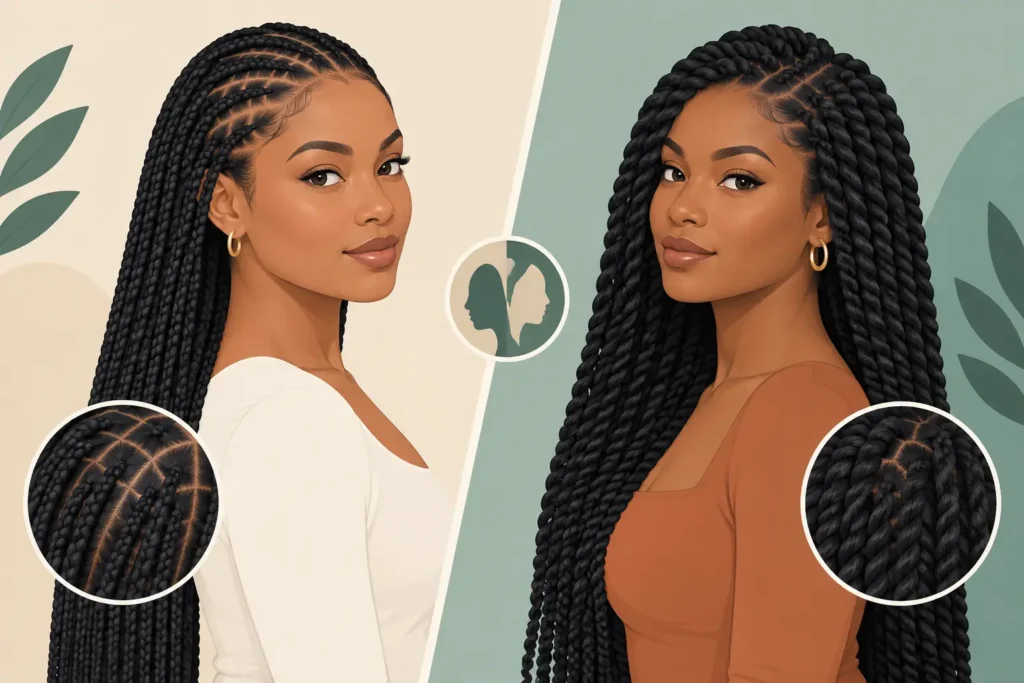
The choice between knotless braids versus Senegalese twists is not just about picking a pretty style from your saved photos. It affects how your scalp feels on day one, how easily you can style your hair for work or brunch, and how your natural hair is treated underneath. Both looks can be polished, protective, and completely confidence-changing when installed with care. The best choice comes down to the finish you love, your lifestyle, and the level of movement you want from your hair.
At Braids by Blinky, beautiful hair and comfortable hair belong in the same appointment. Here is how to choose the style that lets you show up and slay without ignoring your scalp or your schedule.
Knotless Braids Versus Senegalese Twists: The Main Difference
Knotless braids are individual braids created by gradually feeding extension hair into your natural hair. Unlike traditional box braids, they begin without a tight extension-hair knot at the base. The result is a flatter, more natural-looking start that tends to feel lighter and more flexible right away.
Senegalese twists are made by wrapping two strands around one another to create a smooth, rope-like finish. They are sleek, glossy, and beautifully uniform, especially when the parts are crisp and the twists are consistently sized. They can be installed with synthetic braiding hair, and premium human hair options can create an elevated finish depending on the look you want.
Visually, knotless braids have a braided texture with visible plaits, while Senegalese twists look smoother and more cylindrical. One is not automatically better than the other. They simply bring a different kind of beauty to the chair.
Choose Knotless Braids for a Soft, Flexible Finish
Knotless braids are a favorite for clients who want that effortless, scalp-friendly look. Because the stylist adds hair gradually, the roots usually lie flatter than styles that begin with a pronounced knot. This can make ponytails, buns, half-up styles, and side parts feel easier to wear from the start.
They are especially appealing if you are sensitive to heavy tension. A skilled installation still matters, because any protective style can be uncomfortable if the sections are too small for your hair density or pulled too tightly. But properly installed knotless braids are often the more comfortable option for clients who remember the headache that can come with overly tight braids.
Knotless braids also offer plenty of room for personal expression. You can choose a clean classic finish, add curled ends, incorporate bohemian pieces, play with length, or choose a color blend that complements your complexion. They give a polished look that can move from a meeting to a vacation to a night out without missing a beat.
The trade-off is installation time. Feeding hair into each braid with even tension and neat parting is detailed work. It may take longer than a quicker twist installation, especially with small braids or extra length. That precision is part of what gives the final style its high-end, natural appearance.
Who Knotless Braids Suit Best
Knotless braids are a strong choice if you want a versatile style with a natural root area, easy updos, and lightweight movement. They also work beautifully for clients who love to switch their look throughout the week instead of wearing their hair down every day.
If you have a very sensitive scalp, fine edges, or past experiences with painful installs, communicate that during your consultation. Your stylist can help select a braid size, length, and parting pattern that honors your natural hair instead of placing unnecessary stress on it.
Choose Senegalese Twists for Sleek, Defined Glamour
Senegalese twists make a statement without needing extra styling. Their signature rope pattern creates a smooth, refined silhouette that looks intentional from every angle. They are an excellent choice when you want your hair to look sleek, full, and polished with minimal daily effort.
Twists can also feel lighter than some braided styles, depending on the size, length, and hair used. Medium or large Senegalese twists often move beautifully and can create fullness without the density of many small braids. For clients who love a clean, classic protective style with an elegant finish, they are hard to beat.
The main consideration is the base. Senegalese twists usually need a secure foundation so they do not unravel, particularly near the roots. That does not mean they should be painful. Proper tension, clean sectioning, and an experienced hand are what keep the style secure while helping your scalp stay comfortable.
Twists may not offer quite the same flat-root appearance as knotless braids, and frequent tight updos can put pressure on the hairline. If you choose Senegalese twists, wear high buns and ponytails occasionally rather than making them your everyday style. Give your edges some grace.
Who Senegalese Twists Suit Best
Choose Senegalese twists if you love a smooth finish, a slightly more uniform look, and a style that makes getting ready feel simple. They are gorgeous for professional settings, special occasions, and anyone whose personal style leans classic, chic, and put together.
They can also be a great match if you prefer less visible texture than a braid. The shine and rope-like definition make twists feel elevated even when you are wearing a basic outfit. Add statement earrings, a soft glam face, or your favorite lip color, and the style does the rest.
Comfort, Longevity, and Hair Health
Many clients ask which style lasts longer. The honest answer is that it depends on the install, your maintenance routine, your activity level, and how quickly your natural hair grows. Both knotless braids and Senegalese twists can stay neat for several weeks when cared for properly. Smaller sections often last longer visually, but they also require thoughtful tension and may take more time to install and remove.
Knotless braids can show new growth sooner because their flatter base makes the regrowth area more visible. Senegalese twists may maintain a tidy overall shape well, though frizz can develop along the twist pattern over time. Sleeping without protection, frequent swimming, high humidity, and heavy product buildup can shorten the fresh look of either style.
Neither style is protective simply because it is a braid or twist. A protective style needs a healthy installation and healthy maintenance. It should not hurt for days, create bumps, pull your edges, or make you afraid to move your face. If a style feels painfully tight, speak up early. Comfort is not an extra. It is part of excellent braid care.
How to Maintain Either Style Beautifully
Your at-home routine does not need to be complicated, but consistency makes a difference. Protect your hair at night with a satin or silk scarf, bonnet, or pillowcase to reduce friction and preserve the finish. Keep your scalp clean with a lightweight scalp-friendly cleanser or diluted shampoo, focusing on buildup rather than soaking the style too often.
Use a light scalp oil only when your scalp needs it. Too much oil can attract lint and make extensions look dull. If you are wearing knotless braids with curly or bohemian pieces, refresh the curls gently and separate them with care instead of brushing aggressively.
Be mindful with edges. Avoid daily tight ponytails, heavy gels, and styles that pull every braid or twist toward the same spot. Your natural hair is the foundation of the look, so protecting it is always the real flex.
The Best Style Is the One That Fits Your Life
If your dream look is soft, flexible, and easy to switch up, knotless braids may be your match. If you want smooth, rope-like definition and a refined finish that looks beautiful with very little daily styling, Senegalese twists may be calling your name.
Bring your inspiration photos, be honest about your scalp sensitivity, and think about how you actually wear your hair during a normal week. A premium protective style should feel like more than a new look. It should give you the freedom to walk out feeling comfortable, cared for, and completely yourself.