
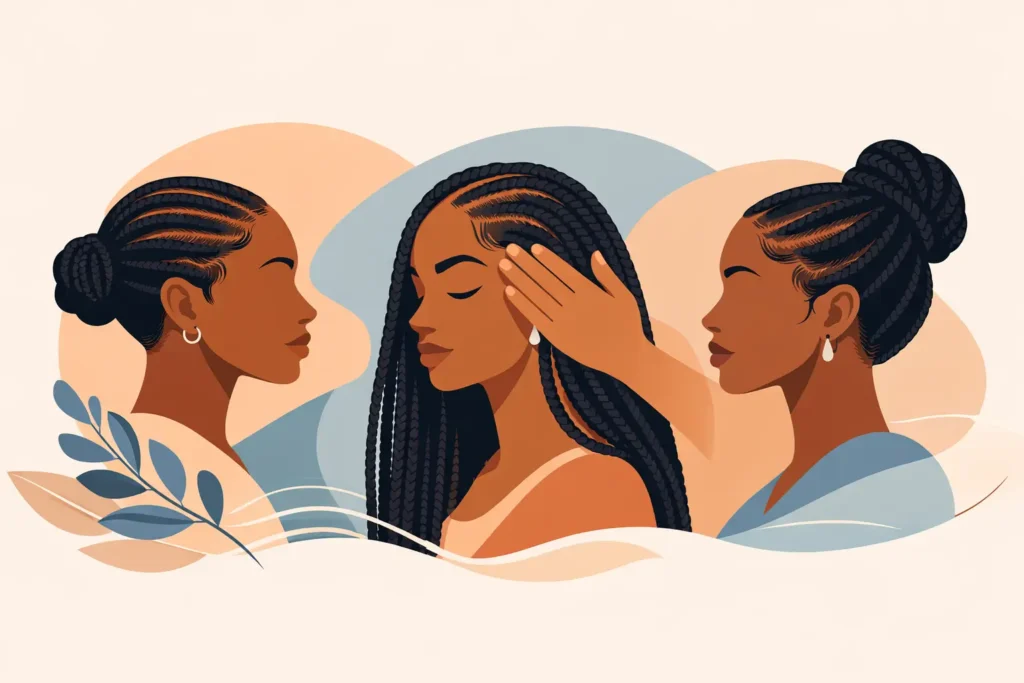
Thin edges will tell the truth before the rest of your hair does. If a style feels too tight, if the parting is too heavy, or if the tension is off, your hairline usually pays for it first. That is why protective braid styles for thin edges need a different approach – not just a pretty finish, but a scalp-conscious install that protects your look and your natural hair at the same time.
The good news is that having delicate edges does not mean giving up braids. It means being more selective about size, weight, parting, and tension. The right style should still let you show up polished, confident, and fully put together without sacrificing your hairline for the look.
What makes braid styles edge-friendly?
A style is not automatically protective just because it is braided. The real difference comes down to how the style is installed and whether it respects the weakest area of your hair.
Thin edges usually need less pull around the perimeter, lighter braid weight, and more flexibility in the front. That may mean leaving some baby hairs out, choosing knotless methods, or avoiding very small braids that create too much tension at the hairline. A clean finish still matters, but neat does not have to mean tight.
Hair density matters too. Someone with fine strands but a full hairline may tolerate a style that another client with sparse edges cannot. This is where consultation becomes so important. The best braid choice is rarely about trends alone. It is about what your edges can comfortably carry for weeks.
Best protective braid styles for thin edges
If your goal is beauty with less stress on the hairline, a few styles consistently stand out.
Knotless braids
Knotless braids are often the first recommendation for clients with thin edges, and for good reason. Because the braid starts with your natural hair and feeds in extension hair gradually, there is less tension at the base than with traditional box braids. That softer start can make a real difference around the perimeter.
They are also versatile. You can wear them in medium or large sizes, keep the front slightly looser, and avoid overloading the braid with too much hair. If your edges are fragile, medium knotless styles usually strike the best balance between fullness and comfort. Very tiny knotless braids can still be too much if there are too many sections pulling at the hairline.
Large or medium box braids with a soft perimeter
Not every client wants knotless, and that is okay. Traditional box braids can still work for thin edges when the size is adjusted and the front is handled carefully. Larger sections mean fewer anchor points, which can reduce stress compared to a head full of extra-small braids.
The catch is technique. If the stylist installs large braids too tightly, the size alone will not save your edges. A soft perimeter, gentle grip, and balanced extension weight matter more than the style name itself.
Fulani-inspired braids with edge-conscious placement
Fulani-inspired styles can be stunning, especially when you want something detailed and fashion-forward. They can also be adapted for delicate edges by spacing the front braids thoughtfully and keeping tension controlled around the hairline.
This is one of those it-depends styles. If your edges are only mildly thin, a customized Fulani look may work beautifully. If your hairline is very fragile, a dense row of front braids may not be the best call. The design needs to fit your hair, not the other way around.
Senegalese twists and island twists
Twists are often a strong option because they can feel lighter and more flexible than some braid styles. Senegalese twists and island twists, especially in medium or larger sizes, can give you that polished, protective look without the same degree of grip some braids require.
They are not automatically safer, though. Twists that are too long or overloaded with hair can still pull at weak edges. Lightweight installation is the goal. If your natural hair is fine, ask for a finish that looks full but does not feel heavy once you stand up from the chair.
Bohemian or French curl styles with lightweight customization
Clients love movement, curls, and that soft luxury finish. Bohemian braids and French curl styles can absolutely be adapted for thin edges, but the amount of added hair matters. Human hair curls and curly pieces can elevate the look, yet too much bulk near the front can create unnecessary strain.
The best version of this style for thin edges is usually one with controlled volume near the perimeter and more fullness placed through the mid-lengths and ends. That way you still get the glam effect without asking your hairline to carry the whole look.
Protective braid styles for thin edges to approach carefully
Some styles are not impossible, but they need extra caution. Extra-small braids, very long braids, heavily layered boho installs, and super-tight slicked-back braided looks can all put fragile edges at risk.
The issue is usually a mix of weight and tension. Tiny braids create many pull points. Extra-long braids become heavy over time. Styles that require firm gripping at the front may look snatched on day one but feel miserable by night. If you are already seeing thinning, discomfort should never be treated like the price of beauty.
A good rule is simple: if the style depends on pulling your edges tight to look finished, it is probably not your best protective option right now.
How to ask for a braid style that protects your edges
The best appointment outcomes start before the first part is made. Be clear about your hairline. If your edges are thin, say that upfront. Point out the areas that feel most delicate, especially if one side is weaker than the other.
Ask for low tension around the perimeter and be honest about your sensitivity level. It also helps to ask whether the chosen size, length, and added hair volume make sense for your density. A polished braid experience should feel personalized, not one-size-fits-all.
This is where an experienced stylist stands out. Precision parting, balanced sections, and scalp-friendly technique can completely change how a style wears. At Braids by Blinky, that kind of detail is part of the beauty. You should be able to leave with a masterpiece and still feel comfortable touching your hairline.
Styling habits that help thin edges after installation
Even a well-installed style needs smart maintenance. Constantly pulling braids into high buns or tight ponytails can undo the care that went into a gentle install. If your edges are recovering, low manipulation is your friend.
Wear your braids down often, or choose loose styling around the front. Sleep with your hair protected so the perimeter does not dry out or snag against cotton. Keep your scalp clean, but do not overdo product around the edges. Heavy gels and constant brushing can create buildup and friction where your hair is already vulnerable.
Pay attention to timing too. Leaving braids in too long can lead to matting, tangling, and stress during takedown. Protective styles should have an exit plan. If your new growth is carrying too much weight, it is time to take the style down gracefully.
When braids may need to wait
Sometimes the most protective choice is a pause. If your edges are actively breaking, your scalp is inflamed, or you are seeing noticeable traction bumps after styling, braids may not be the best immediate move.
That does not mean you are out of options forever. It may just mean your hairline needs a break before returning to extension styles. A responsible stylist will not force a look your edges are not ready for. Beauty lands better when your foundation is healthy.
Choosing beauty that respects your hairline
Protective braid styles for thin edges should never leave you choosing between looking good and keeping your hair. You deserve both. The right style will frame your face beautifully, feel comfortable on your scalp, and support the long game for your natural hair.
When your edges are delicate, the smartest choice is usually not the smallest, longest, or fullest look on the menu. It is the one installed with care, tailored to your density, and designed to let you show up and slay without hidden damage. Your best braid style is the one that still loves your hairline back when the appointment is over.