
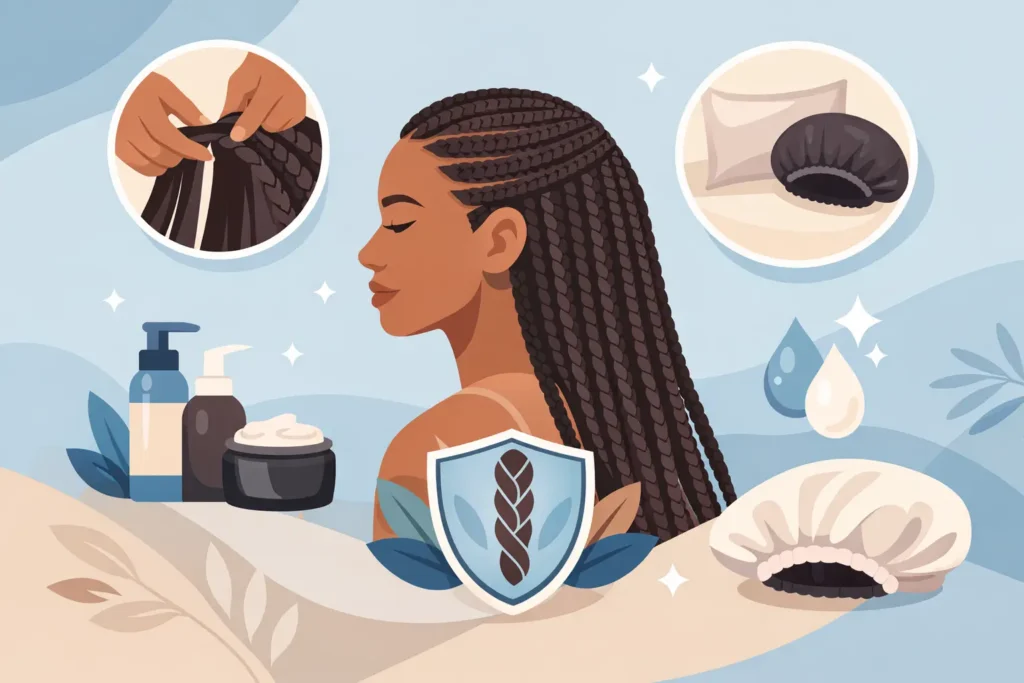
Fresh braids can have you feeling instantly put together – neat parts, clean lines, and that confidence that comes from a style done right. But knowing how to protect braids after you leave the chair is what keeps that look polished instead of tired. Great braids are not just about installation. They are also about what you do in the days and weeks that follow.
Protective styling should actually protect your hair. That means preserving your edges, keeping your scalp comfortable, reducing frizz, and helping the style age beautifully. If your braids usually start looking rough after a week, or your scalp feels irritated halfway through the style, the issue is often not the braids themselves. It is the maintenance.
How to Protect Braids From Day One
The first few days matter more than most people realize. Once your braids are freshly installed, your goal is to keep tension low, moisture balanced, and friction minimal. This is especially true if you are wearing knotless braids, boho braids, French curls, or any style with added loose hair that can frizz faster.
Start by leaving the style alone as much as possible. Constantly pulling braids into tight buns, redoing your baby hairs, or over-handling the length can shorten the life of the style. Braids settle best when they get a little time to relax naturally.
If your scalp feels tender, resist the urge to scratch aggressively. A light scalp oil or braid spray can help calm dryness, but the key is moderation. Too much product creates buildup, and buildup makes braids look older faster. A clean, lightly moisturized scalp almost always wears better than one coated in heavy grease.
Keep Your Scalp Healthy Without Overdoing It
A lot of clients think protecting braids means using more product. Usually, it means using less, but using it better.
Your scalp still needs attention while it is under a protective style. Dryness, itchiness, and flaking can make even the prettiest braids feel uncomfortable. The fix is not to saturate your roots every day. Instead, use a lightweight scalp product a few times a week, especially in areas that feel dry. Focus on your scalp, not the full braid length.
If you sweat often from workouts, heat, or busy days on the go, your scalp may need a little more frequent care. In that case, a gentle scalp cleanse or braid-friendly refresher can help. If you do not sweat much and your scalp stays balanced, less is better. It depends on your lifestyle, your scalp, and the season.
A good rule is this: if your roots feel heavy, sticky, or look dull, pull back on product. If your scalp feels tight and thirsty, add a little moisture. Healthy braid maintenance is about balance, not excess.
Watch for signs your braids need a reset
If your style starts smelling less fresh, your scalp feels itchy right after applying product, or you notice visible buildup near the roots, your routine may be too heavy. Braids look their best when the scalp is clean and the parts can still shine through.
Protect Braids at Night or Expect Frizz
If you want to know how to protect braids in the simplest, most effective way, start with your nighttime routine. Cotton pillowcases pull moisture from the hair and create friction that roughs up the braid surface. That is why a style can look noticeably older after just a few nights of sleeping uncovered.
Wrap your braids with a satin or silk scarf before bed. If your braids are long or full, gather them into a loose low ponytail or braid them into a few large sections first so they stay organized under the wrap. A bonnet over the scarf can add extra protection, especially for bohemian styles or curly ends.
The goal is not to flatten the style. The goal is to reduce rubbing, preserve neatness, and help your edges stay smooth. This one habit can make a major difference in how long your braids stay fresh.
Loose is better than tight at bedtime
Do not pile your braids into a super tight top knot every night. That may feel convenient, but repeated tension around the hairline can stress your edges. A loose wrap is protective. A tight bedtime style can work against the whole point of wearing braids.
Be Careful With Edges and Tension
A beautiful braid style should still feel wearable. If you are constantly pulling your braids back tightly, slicking down your edges every day, or wearing heavy updos, you may be adding strain where your hair is most delicate.
Your hairline needs a softer approach. Alternate between wearing your braids down, in a low ponytail, or in loose styles that do not tug at the front. If your edges were already fragile before your appointment, this matters even more.
The same goes for refreshing your edge control too often. A little finishing product is fine, but daily layering can lead to flakes and buildup around the front. Clean, soft edges usually look better than overworked ones anyway.
How to Protect Braids While Showering and Working Out
Steam, sweat, and moisture are part of real life. You do not need to stop living beautifully just because you got your hair done. You just need a smarter routine.
In the shower, keep your braids covered when you are not actively cleansing them. Humidity alone can puff up the roots and frizz the lengths, especially with textured add-on hair or curly pieces. A shower cap is simple, but it helps more than people think.
For workouts, try pulling braids into a loose style that keeps them off your neck without creating tension. Afterward, let your scalp dry fully. If sweat sits too long at the roots, it can cause itching or odor. Some clients do well blotting the scalp gently with a clean cloth and following with a light braid refresher.
If you exercise often, your braids may need scalp care more regularly than someone with a lower-sweat routine. That is normal. The best maintenance plan matches your real schedule, not an ideal one.
Know When Washing Helps and When It Hurts
Yes, you can wash braids. But how often depends on the style, your scalp, and how long you plan to keep them in.
If your scalp builds up quickly, a gentle cleanse can help extend the style by keeping things fresh. If your braids are newer and still very neat, you may prefer to focus on scalp cleansing without fully soaking the whole length. If your style includes curly ends, human hair accents, or boho pieces, washing may require a little more care so the finish stays pretty.
The main thing is to be gentle. Rubbing too hard creates frizz. Heavy residue from shampoos or creams can also weigh the style down. Clean does not need to mean rough.
Frizz Control Matters, But So Does Realism
Every braided style frizzes a little over time. That is normal. The goal is not to freeze your braids in day-one condition forever. The goal is to help them stay neat, soft, and presentable for as long as possible.
This is where realistic expectations matter. Styles with curly strands, loose ends, or a softer bohemian finish will naturally show wear faster than sleek, classic braids. That does not mean the style failed. It just means the maintenance needs to match the look.
A light mousse can help smooth surface frizz when used occasionally. Too much, though, can leave the hair sticky or dull. If your braids are still structurally neat, a little frizz is often better than overloading the style with product trying to erase it.
Leave Braids In for the Right Amount of Time
One of the most overlooked parts of how to protect braids is knowing when to take them down. Keeping them in too long can lead to tangling at the roots, excess shedding buildup, dryness, and stress on your natural hair.
There is no perfect number for everyone. Larger braids may not wear as long as smaller ones. Clients with faster new growth may notice loosening sooner. Some styles stay beautiful for weeks, while others are meant for a shorter fashion moment. It depends.
What matters is paying attention. If your roots are heavily grown out, your scalp is begging for a reset, or the braids no longer feel clean and comfortable, it may be time. Protective styling works best when it is part of a healthy routine, not when it is stretched past its season.
The Best Protection Starts With the Install
Home care matters, but let us be honest – braid protection starts in the chair. Clean parting, proper tension, and a scalp-friendly technique set the tone for everything that comes next. If the installation is too tight, too messy, or too heavy for your hair, maintenance can only do so much.
That is why choosing a stylist who respects both the look and the health of your hair makes all the difference. A polished finish should never come at the cost of your comfort. When braids are installed with precision and care, they are easier to maintain, easier to wear, and far more likely to age well.
Protecting your braids is really about protecting your whole experience – your scalp, your natural hair, your edges, and the confidence that comes from a style that still looks good weeks later. Treat them with consistency, not stress, and your braids will keep showing up for you beautifully.