
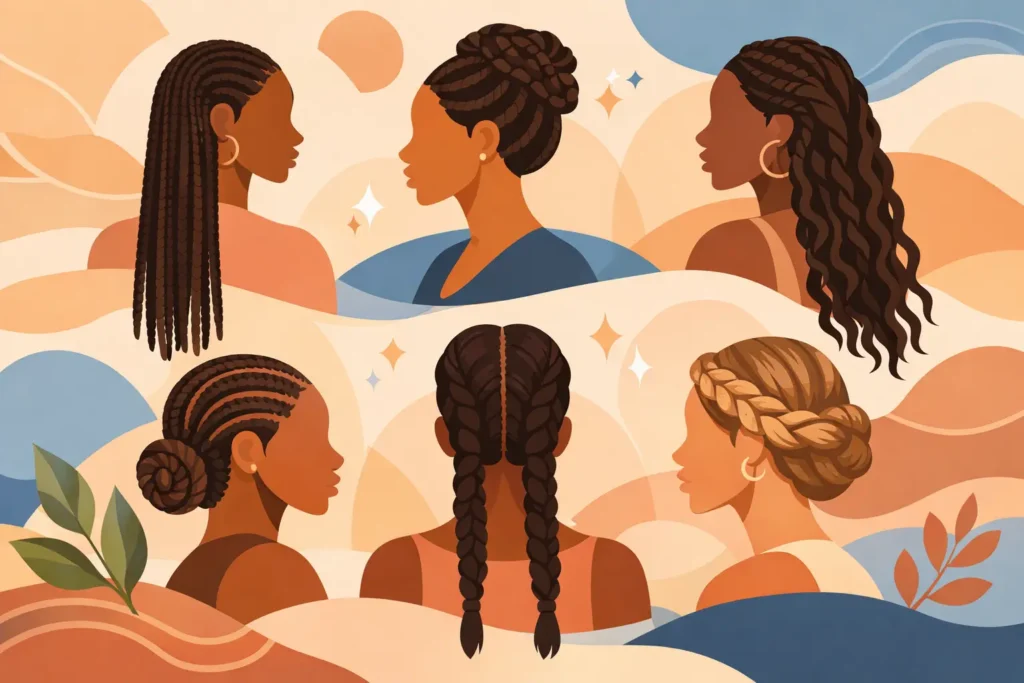
The right braid style can change everything – how your hair feels, how fast you get ready, and how confidently you walk into the room. When clients ask about the best types of protective braids, they usually want more than a pretty look. They want a style that protects their natural hair, feels good on the scalp, lasts well, and still gives that polished, camera-ready finish.
That is where the details matter. Not every braid style gives the same level of fullness, movement, maintenance, or install time. Some are better for a sleek everyday look. Others are made for soft glamour, statement curls, or a more lightweight finish. Knowing the difference helps you choose a style that fits your hair goals instead of just following what is trending.
What makes protective braids actually protective?
Protective braids are meant to reduce daily manipulation and help shield your natural hair from friction, overstyling, and constant heat. But the word protective only applies when the installation is done well. If the braids are too tight, the parts are uneven, or the tension is excessive around the edges, even a beautiful style can create stress where you want safety.
A truly protective install starts with clean sectioning, proper weight distribution, and tension that feels secure but not painful. You should be able to leave your appointment looking flawless without feeling like your scalp is under pressure. That balance is a big part of what separates luxury braid work from rushed braid work.
11 types of protective braids worth considering
Knotless braids
Knotless braids are one of the most requested styles for a reason. Instead of starting with a hard knot at the root, the extension hair is fed in gradually, which creates a flatter, more natural-looking base. The result is lightweight, flexible, and often more comfortable than traditional box braids.
They are a strong choice if you want versatility. You can wear them in a bun, a ponytail, half-up styles, or straight down without the roots looking bulky. If your scalp is sensitive, knotless is often the first style to consider.
Box braids
Box braids are the classic that never really leaves. They are installed in square or box-shaped sections and can be worn in a wide range of sizes and lengths. They tend to have a fuller look at the root compared to knotless braids, which some clients actually prefer because it gives the style more structure.
The trade-off is tension and weight. If they are installed too tightly or made too long with too much hair, they can feel heavier. Done properly, though, box braids still deliver longevity, neatness, and a timeless finish.
Bohemian braids
Bohemian braids bring softness into the braid world. This style usually combines braided sections with loose curly strands woven throughout, giving the hair movement, texture, and a more romantic finish. It is perfect for clients who want their protective style to feel elevated and a little more glamorous.
Boho styles do require more maintenance than plain braids. Those loose curls can frizz faster and need gentle refreshing to keep the style looking intentional. But for many people, the look is worth the extra care because it feels effortless and high-end.
French curl braids
French curl braids are known for their sleek braided length and curled ends. They give you the neatness of braids with a soft, feminine finish at the bottom, which makes them especially popular for events, vacations, and anyone who wants a little extra flair without committing to full boho texture.
This style photographs beautifully and feels dressy even when you are wearing something simple. If you want a braid style that looks refined right away, French curls are a strong option.
Fulani-inspired braids
Fulani-inspired braids stand out because of their pattern. They often feature a combination of center braids, side braids, and braided details that frame the face, sometimes paired with beads or curls. This style gives you room for creativity while still keeping the hair protected.
It is ideal for someone who wants structure and personality in the same look. Because the braid pattern is part of the statement, precision matters here. Clean parting makes all the difference.
Senegalese twists
Senegalese twists are a smooth, rope-like protective style created with two-strand twisting. They have a sleek finish and usually look a bit shinier and more uniform than some braid styles. If you like a polished look without the visual density of traditional braids, twists may feel like a better match.
They are also easier for some clients to wear in updos because of how they drape. That said, twists can unravel faster than braids if they are not maintained well, especially around the perimeter.
Island twists
Island twists offer a softer, more textured take on twists. They tend to feel a little more relaxed and fashion-forward, making them a favorite for clients who want something that reads effortless but still put-together. Depending on the finish, they can lean beachy, boho, or simply modern.
If you love movement and a style that does not feel overly stiff, island twists are worth a look. They are especially pretty when you want a protective style that still feels airy.
Gypsy braids
Gypsy braids are often chosen for their mix of braid structure and free-flowing texture. Like other curly braid looks, they give softness and fullness without losing the protective base. The overall effect is expressive, feminine, and very statement-making.
This style is best for someone who loves volume and does not mind giving their braids a little extra attention. If your priority is the easiest possible upkeep, a simpler braid style may suit you better.
Bora braids
Bora braids are popular for their trendy finish and eye-catching detail. They often blend neat braid work with textured or curly elements that create a fuller, more styled appearance. This is the kind of look clients choose when they want protective hair that still feels very fashion-first.
Because the finish is part of the appeal, quality hair and careful installation matter a lot. When done with precision, Bora braids can look striking from day one through the life of the style.
Cornrows and feed-in braids
Cornrows and feed-in braids sit closer to the scalp and are ideal if you want a low-profile style with clean visual impact. Feed-ins create a more natural transition by gradually adding hair, which keeps the braid from looking too bulky at the start.
These styles are especially useful when you want something sleek, easy to manage, and lighter than long individual braids. They do not usually last as long as box or knotless braids, but they are excellent for a crisp, elegant look.
Goddess braids
Goddess braids can mean different things depending on the stylist, but the common thread is softness and drama. Often larger than standard braids and sometimes paired with curls, they give a regal, styled finish that still protects your natural hair.
They are a smart option when you want your braid appointment to produce a look that feels special right away. Think less understated, more show up and slay.
How to choose between different types of protective braids
The best style is not always the most popular one. It depends on your scalp sensitivity, your schedule, how long you want the style to last, and how much maintenance you are willing to do between appointments.
If comfort is your top concern, knotless braids and properly installed feed-ins tend to feel lighter at the root. If you want drama and softness, bohemian, gypsy, Bora, or French curl styles may be more your speed. If you want sleek longevity with less daily styling, box braids or Senegalese twists often make sense.
Lifestyle matters too. If you are in the gym often, loose-curl styles may need more refreshing. If you work long days and want a style that still looks put together with minimal effort, classic neat braids or twists can make mornings much easier.
A few care habits that help braids last
Even the best install needs proper upkeep. A clean scalp, a light mousse when needed, edge care that is not overly aggressive, and a silk or satin wrap at night can make a visible difference. The goal is to preserve the neatness without creating buildup.
It also helps to know when to let the style go. Keeping braids in too long can lead to tangling, dryness, and stress on your roots. Protective styling works best when it is part of healthy hair care, not a replacement for it.
For many clients, the best braid appointment is the one that gives beauty and relief at the same time – a style that looks premium, feels comfortable, and lets your natural hair rest underneath. The right choice should fit your life as well as your look, so when you are choosing between the many types of protective braids, go with the one that lets you leave the chair feeling like yourself, just elevated.